User sees
A calm coaching surface
A simple chat and a plan that updates when the user needs direction.
System handles
The reasoning underneath
Routing, memory, safety context, and normalized plan changes before the answer reaches the user.
User sees
A simple chat and a plan that updates when the user needs direction.
System handles
Routing, memory, safety context, and normalized plan changes before the answer reaches the user.
Goal, context, constraints, and current state.
Clarifies intent and routes to the right specialist.
Stores plan state, decisions, and context over time.
Returns structured guidance for safe, practical action.
Escalations happen only when recovery, pain, nutrition, or progression signals need deeper reasoning.
Training decisions stay connected across sessions instead of resetting every time the user sends a new message.
The important output is a clearer plan, a safer adjustment, or the next action, not just a better paragraph.
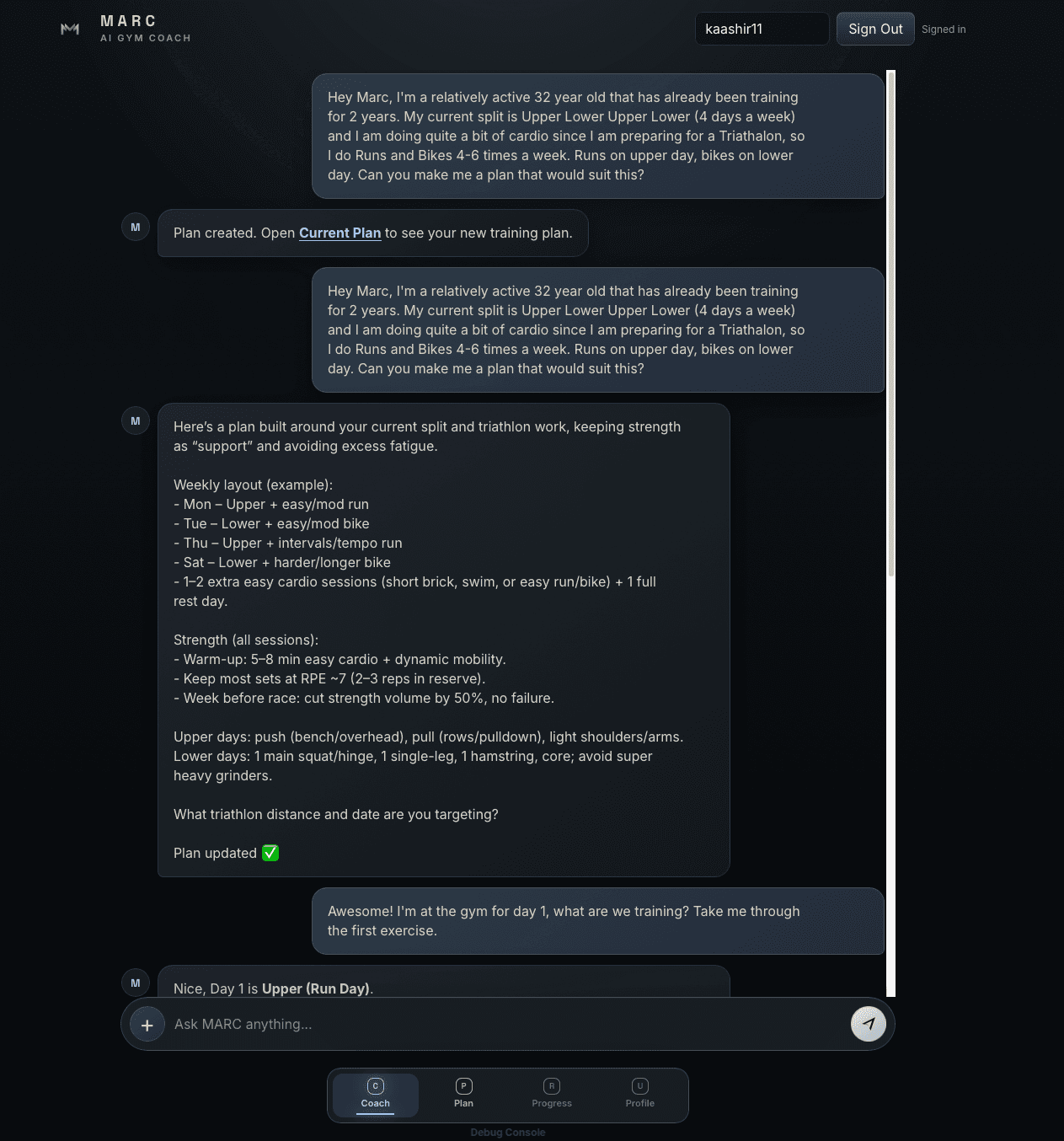
The coach asks for context, builds a plan, and keeps the user moving toward the next action.
Generated from structured context, not generic coaching prompts.
Recovery, nutrition, pain, and progression questions can trigger deeper specialist reasoning.
Training decisions stay connected across sessions instead of starting from scratch every chat.
Responses are shaped into plan changes, safety adjustments, or next actions.
mrinal@portfolio:~$ cd marc
mrinal@portfolio:~/marc$ less learning-log.md
MARC worked best when the interface stayed quiet. The product had to make complex coaching logic feel simple enough to trust in the middle of a workout.
Better prompts were not enough. The system needed to know when to involve specialist reasoning for recovery, pain, nutrition, or progression.
A useful coach cannot reset every conversation. Training decisions had to carry forward so each answer could respond to the current plan, not just the latest message.
The strongest responses were shaped into clear plan updates, safety adjustments, or next actions. The value was in making the answer usable.